A Thanksgiving Story 300 Years in the Making
How the Biloxi Indians helped the French ancestors of Avoyelles Parish survive
By Randy DeCuir
If it hadn’t been for the Biloxi tribe along the gulf coast over 300 years ago, many of the first French families of Avoyelles Parish might not exist today. Can you imagine Avoyelles Parish without the surnames Bordelon and Lemoine? It came closer than most of us realize. This is a Thanksgiving story that few are aware of.
Before the first crops were ever harvested in the fertile soils of Avoyelles Parish, the very survival of its oldest French colonial families hung by a thread on the sun-baked shores of Biloxi Bay. During the grueling winter of 1720, as starvation, disease, and broken promises from European supply ships threatened to wipe out the fledgling French colony, it was the hospitality, agricultural wisdom, and open doors of the coastal Native tribes, including the Biloxi, that kept those early settlers alive.
Centuries later, that historical debt has come full circle. Today, the sovereign Tunica-Biloxi Tribe of Louisiana stands as the parish’s largest single employer, creating opportunities that allow thousands of local families to earn a living every day. In a remarkably literal sense, the spirit of Thanksgiving binds these two cultures together across time. Without the generosity of the Biloxi and their allies three centuries ago, the ancestors of some of Avoyelles Parish’s French families might not have survived colonial history to write the story of Avoyelles.
The 1720 survival struggle of Avoyelles’ French ancestors was not just a brief historical encounter; it planted the seeds for two distinct communities that live side by side in our parish today.
After helping the French colonists survive their initial years along the Gulf Coast, the Biloxi people eventually moved westward across the Mississippi River due to shifting colonial tensions and population loss. By the late 18th century, the Biloxi merged with the Tunica, an ancient Mississippi Valley trading power skilled in salt production and river commerce, near the high bluffs of Marksville. Meanwhile, French colonists moved inland to the rich river country of Avoyelles, settling alongside the land that would eventually become the modern-day Tunica-Biloxi Reservation.
The Mississippi bubble and the starving colony
The survival struggle of the French colonists on Biloxi Bay in 1720 mirrors the famous story of the Plymouth Pilgrims. Just as the English relied on the Wampanoag in New England, the French in Louisiana faced a stark reality: without the generosity, agricultural knowledge, and food supplies of the native tribes, their colony would have perished completely.
Between 1718 and 1720, thousands of French settlers, German immigrants, soldiers, and indentured laborers were packed onto ships and sent across the Atlantic during the height of the expansion of the French colony of Louisiana. When ship after ship dropped anchor at Nouveau Biloxi (New Biloxi) and Fort Maurepas (Old Biloxi), the newcomers stepped into a perilous situation:
•No established crops:
The newly arrived colony had virtually no infrastructure or established agriculture.
•Supply chain break
down: Supply ships from France were irregular, delayed, or poorly provisioned.
•Extreme overcrowd
ing and disease: Hundreds of weak, malnourished colonists were stranded on the hot, humid shores of Biloxi Bay without adequate shelter. Scurvy, dysentery, and yellow fever quickly swept through the camps.
By the winter of 1720, the French administration under Jean-Baptiste Le Moyne de Bienville realized they were facing total starvation.
The lifeline: native hospitality
Surrounding Biloxi Bay were several localized indigenous nations, primarily the Biloxi (a Siouan-speaking tribe), the Pascagoula, the Mobiliens, and nearby Choctaw and Tunica bands.
Unlike the English colonists in New England, who often maintained a tense, fortified posture, the French relied heavily on direct integration with local tribes for basic survival. When winter set in and French rations ran out, the Native tribes stepped in:
1. Sharing the harvest:
Native women—who farmed sophisticated companion crops of maize (corn), climbing beans, squash and root tubers, supplied the French posts with grain, cornmeal and dried pumpkins.
2. Teaching coastal sur
vival: Indigenous hunters and fishermen taught the French how to exploit the Gulf Coast ecosystem. They showed the colonists how to harvest redfish, mullet, oysters, and blue crabs from the bayous, and how to hunt white-tailed deer and black bear in the pine flatwoods.
3. Billeting in villages:
To keep the colonists alive through the leanest months, French officers scattered soldiers and settlers directly into local Native villages. The Biloxi and Pascagoula hosted groups of Frenchmen in their bark-roofed homes, feeding them from their own winter reserves until spring.
A "Gulf Coast Thanksgiving"
While the French did not establish a formal, annual holiday named "Thanksgiving" in the American tradition, they frequently observed Feasts of Thanksgiving (actions de grâces) rooted in Catholic tradition whenever relief ships arrived or harvests were saved.
During those desperate months of 1720, joint meals were shared between French settlers and local tribal leaders:
The menu: Instead of New England turkey and cranberries, this Gulf Coast feast consisted of roasted venison, sagamité (boiled corn hominy), smoked mullet, red drum baked in earthen pits, wild duck and native berries.
Diplomatic gifts
In return for food and shelter, Bienville and French traders offered glass beads, brass kettles, iron knives, vermilion pigment, and trade blankets. (Artifacts reflecting these early trade relationships can still be seen in the Tunica-Biloxi Museum today.)
Without the food, shelter, and survival instructions provided by the Biloxi and neighboring tribes during the 1720 crisis, the French presence on the Gulf Coast likely would have collapsed before the colonial seat was successfully established inland at New Orleans.
A shared heritage in Avoyelles
There is a profound historical symmetry to how this story unfolded over the centuries.
The Biloxi who sustained the French colonists during the winter of 1720 eventually joined forces with the Tunica, establishing their sovereign home in Marksville. Today, their reservation stands as a living testament to that legacy, preserving Native traditions, historic basketry, and language revitalization while serving as an economic anchor for the region.
Meanwhile, descendants of those early surviving 1720 French settlers, bearing names like Bordelon, Carmouche, Chatelain, Ducote, Decuir, Dufour, Gauthier, Lacour, Lemoine, Mayeux and Rabalais, built the farms, towns and unique French-Creole culture of Avoyelles Parish, living right next door to the descendants of the people who saved their ancestors.
Avoyelles is today home to the largest concentration of Tunica Biloxi descendants, as well as the original French colonial families of Louisiana, who first met on the Mississippi coast and continue to live in harmony today in central Louisiana.
Fast-forward from 1720 to the late 20th century, and history repeated itself. In the 1990s, the Tunica-Biloxi Tribe once again came to the aid of the parish's economy.
When the tribe established its premier gaming and entertainment operations in Marksville, the local economy transformed almost overnight. Hundreds of quality jobs were created, lifting wage standards across the region and driving parish unemployment down to single digits for the first time in decades.
Twice in history, first on the shores of Biloxi Bay in 1720, and again in modern Avoyelles Parish, the Tunica-Biloxi have played a vital role in sustaining the families of this region.
That is a true Thanksgiving story that you just won’t find in any standard history book.
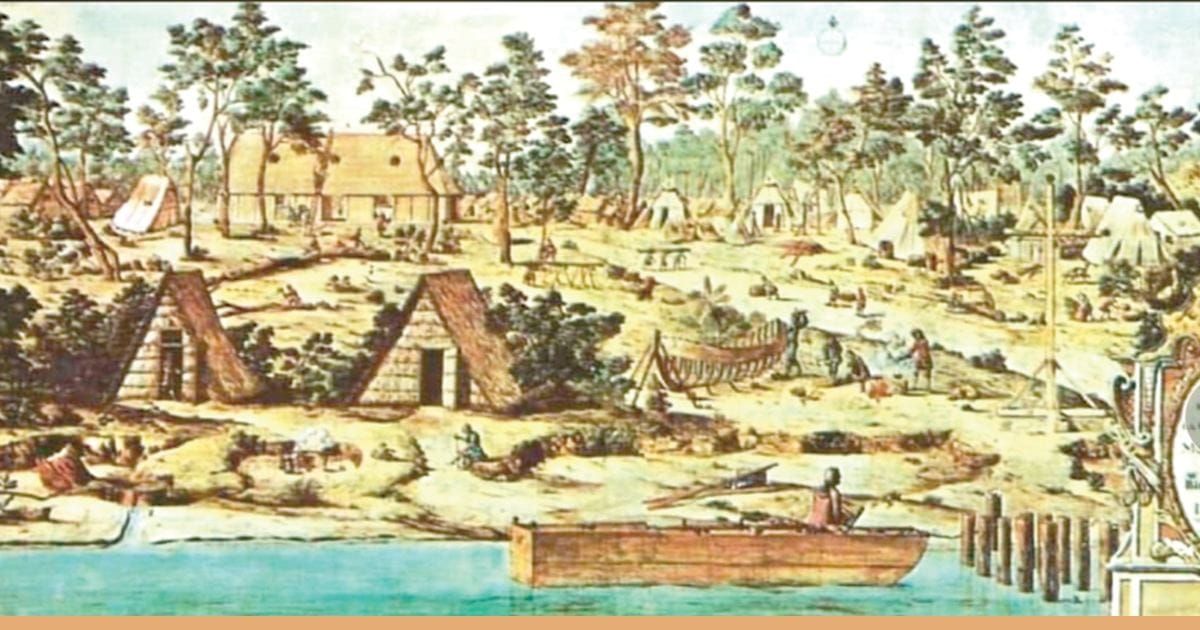
This rare view of John Law’s camp on the Biloxi shores in 1720 depicts where settlers including Bordelon, DeCuir, DuCote, DuFour, Lemoine, Mayeux, Rabalais and many other patriarchs of Avoyelles spent their first winter and were saved by the Biloxi Indians from starving. Biloxi was an early capital of the vast Louisiana French province before it was moved to New Orleans in 1722.
Historical accounts describe Native communities along the Gulf Coast offering food and support to struggling French colonists in 1720-1722, a reminder of the cooperation and hospitality that helped shape Louisiana's early history.


Comments ()