
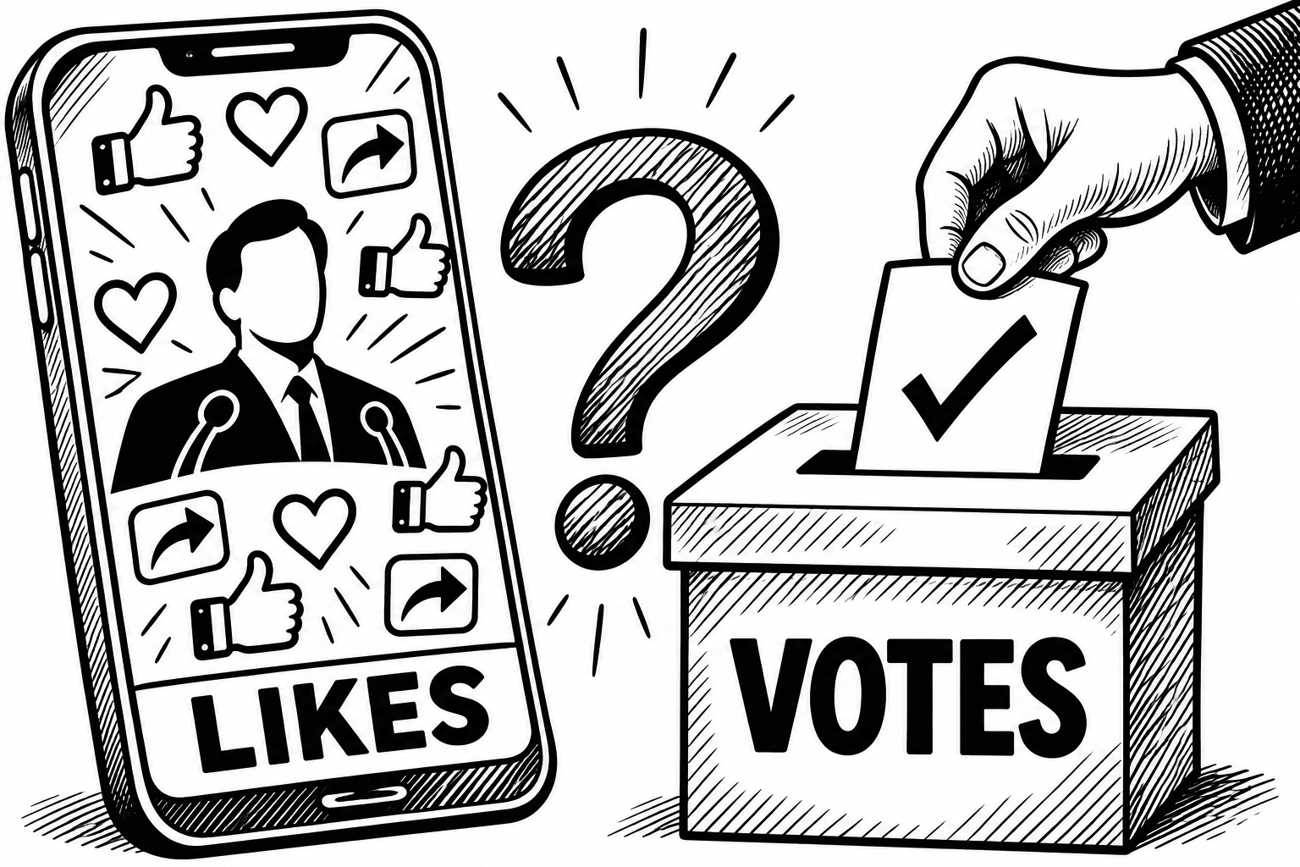
Can we predict an election winner from likes and shares?

By Dr. Jay Callegari
Weeks before Election Day, likes and shares can make a candidate's support visible. When the same pattern holds across many posts and later resembles the vote, it is reasonable to wonder whether the public was signaling its choice all along.
That is worth noticing. It is also worth understanding what those numbers count. The same supporters can react repeatedly. Some people online cannot vote in that election. Others will vote without ever posting a political opinion. Even a share can carry criticism.
 Editor

A 2025 study found that Facebook page likes predicted winners in just under two-thirds of the contests examined. That suggests useful information, with plenty of room for error. Page likes are also different from reactions and shares on individual posts.
Online enthusiasm may reflect existing support, help spread it, or do both. A close match with the result does not tell us which explanation is right. Likes and shares can offer clues to momentum. They cannot guarantee a winner.
The larger change is who carries the campaign. Word of mouth has always mattered. Social media lets a familiar personality deliver a recommendation to thousands of people at once. A candidate's own page can be quiet while supporters do much of the talking.
That helps explain why advertising dollars alone cannot tell the whole story. A campaign purchases exposure. An enthusiastic supporter brings a relationship with an audience. Those are different ways of getting someone's attention.
Someone may earn a following through cooking, comedy, sneakers or outrageous behavior. Eventually, that familiar voice recommends a candidate. The audience already knows the messenger. How carefully has it examined the recommendation?
Being good at attracting attention does not automatically establish sound political judgment. We can enjoy someone's videos without treating that person as an authority on public office.
The fair test is relevant knowledge, judgment and integrity. A cook may understand government exceptionally well. Someone with an impressive title may offer a shallow endorsement. Both should be able to explain their reasons.
Look at the content and character behind the recommendation. Does this person get facts right, correct mistakes and handle disagreement honestly? Do they understand what the office actually does? Are personal or financial connections clear?
A useful endorsement connects a candidate's experience, character or priorities to the responsibilities of the job. Praise can introduce us to someone. It should also leave room for questions. That standard applies equally to entertainers, newspaper commentators and elected officials.
Enthusiasm deserves respect. It can bring people into public life. A short, excited post does not reveal everything its author considered privately, but it also does not give the reader much evidence to evaluate.
For candidates, the lesson is to give supporters something meaningful to explain. For voters, it is to understand what persuaded us. Likes and shares may suggest who is gaining support. Choosing who should hold office still requires our own judgment.



Comments ()