Early agricultural ties to Avoyelles Parish

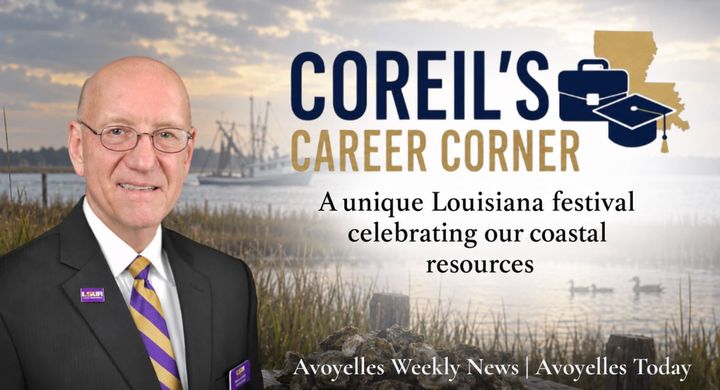
By Paul Coreil
In many ways, being born and raised in Evangeline Parish naturally created a strong affinity for Avoyelles Parish. The two parishes share not only a geographic border, but also many cultural traditions and values.
The people of both parishes have long been known for being friendly, kind, welcoming and outgoing, with a strong French and Cajun cultural heritage that is unique and unmistakable.
When I was growing up in the 1950s, 1960s and early 1970s, the French language was still commonly spoken throughout the area, and traditional Cajun food and music were an important part of everyday life.
Rice and gravy, smoked sausage, ponce (also known as chaudin or gog), tasso, and chicken and sausage gumbo were staples at many family tables. Because of these—and many other similarities—I have always felt completely at home in Avoyelles Parish.
But my connection to Avoyelles Parish goes much deeper than cultural similarities. One of my earliest and most significant family connections to the parish came through my father’s first job in the agricultural industry with Guaranty Seed Company in Bunkie, Louisiana.
Guaranty Seed Company was owned and operated by brothers Roy and Charles Fontane, who were pioneers in Louisiana agriculture. The company was a major supplier of commercial seed and fertilizer to farmers throughout the region and across Louisiana. Customers served grew cotton, corn, soybeans, rice, sorghum and many other crops that were important to Louisiana agriculture.
The company also owned and operated a major fertilizer manufacturing plant just south of Bunkie, where its famous Old Maud fertilizer brand was produced. Farmers from that era will probably remember the distinctive image of the old mule on the fertilizer sack and the popular slogan, “The fertilizer with a kick!”
At that time, bulk fertilizer had not yet become commonplace, and instead, fertilizer was distributed in 80-pound sacks, which required a tremendous amount of manual labor to load, unload, stack and deliver. As a young boy working around agricultural businesses, I certainly got my share of that physical labor handling those 80-pound fertilizer sacks!
In addition to the company’s main store, warehouse and fertilizer manufacturing plant in Bunkie, the Fontane brothers owned and operated a large feed and fertilizer retail and wholesale business in Ville Platte, where I grew up.
That store was called Evangeline Seed Company. While my dad worked as a statewide sales representative for the Guaranty Seed Company enterprise (both Bunkie and Ville Platte stores), he and my mother also operated and managed the Ville Platte store.
When I was about 12 years old, around 1967, I got my first paying job working at Evangeline Seed Company (the Ville Platte store). My responsibilities were anything but glamorous. I loaded and unloaded sacks of feed, fertilizer and seed and performed whatever other physical labor that was needed.
The business also sold baby chicks, which were extremely popular at the time. Many families raised their own chickens for fresh eggs and meat, so the sale of live chicks was an important part of the business. Someone had to feed and water the chicks, unload them when they arrived, catch them for customers and, of course, clean the “droppings” from their cages every couple of days. You can probably guess who got that particular assignment!
One of the more unusual and memorable traditions occurred around Easter. My dad would dye some of the baby chicks different colors to celebrate the Easter season. Blue, red, orange, green and purple chicks became a popular attraction and brought many children and their parents into the store, even people who were not regular customers.
Of course, the chicks did not remain colorful forever. As they grew and molted, they eventually lost their dyed feathers and returned to their natural coloring before reaching maturity and becoming laying hens or table birds. It was certainly a different time, and one that I will never forget!
My early employment at the Ville Platte store also provided me with some memorable experiences involving Bunkie. I was occasionally asked to drive a large flatbed truck to the main store in Bunkie to pick up loads of seed or fertilizer for delivery to farmers throughout Evangeline Parish.
On one of those trips, when I was about 14 years old, Mr. Fontane came out of the Bunkie store and asked me if I had a driver’s license. Since you had to be 15 years old to obtain a driver’s license at that time, I obviously had to tell him that I did not. Mr. Fontane was not particularly happy with my answer. I believe his next move was a phone call to my dad! Needless to say, that was my last solo trip driving the truck to the Bunkie store.
Although I did not realize it at the time, those early experiences were laying the foundation for my future career in agriculture. After graduating from high school and college, I was fortunate to begin a career with the LSU AgCenter. I first served as a county agent, later became an Extension specialist, and eventually served as Vice Chancellor and Director of the Louisiana Cooperative Extension Service on the LSU Campus in Baton Rouge.
Throughout my career serving agriculture across Louisiana, I frequently met farmers and agricultural leaders who remembered my dad from his years on the road as a sales representative for Guaranty Seed Company. Those early experiences in the Ville Platte store working alongside my mom and dad taught me valuable lessons about work ethic, customer service and, most importantly, the vital role agriculture plays in Louisiana.
Those lessons stayed with me throughout my 43-year career working for the LSU System. I was indeed blessed to work 35 years for the LSU AgCenter serving Louisiana farmers and ranchers, and later eight years serving rural students across Central Louisiana as LSUA Chancellor.
Looking back, I can now see that my career journey began, in many ways, with my father’s first job in Bunkie. That early connection to Avoyelles Parish helped expose me to the people, businesses and agricultural traditions that would become such an important part of my life.
What began with my father’s agricultural career in Avoyelles, eventually helped shape my own lifelong commitment to Louisiana agriculture and the people who make it such an important part of our state.
I am grateful to my parents and the many farmers, agricultural leaders, family members, friends and mentors from both Avoyelles and Evangeline Parishes who helped nurture my interest in agriculture so many years ago. Their influence has remained with me throughout my life and career.
God bless the farmers of Avoyelles and Evangeline Parishes, and all of those who continue to feed and sustain Louisiana and the nation through their hard work and dedication.
Until next time,
Paul Coreil
Comments ()