
Louisiana's Ten Commandments Mandate: A Divine Debate
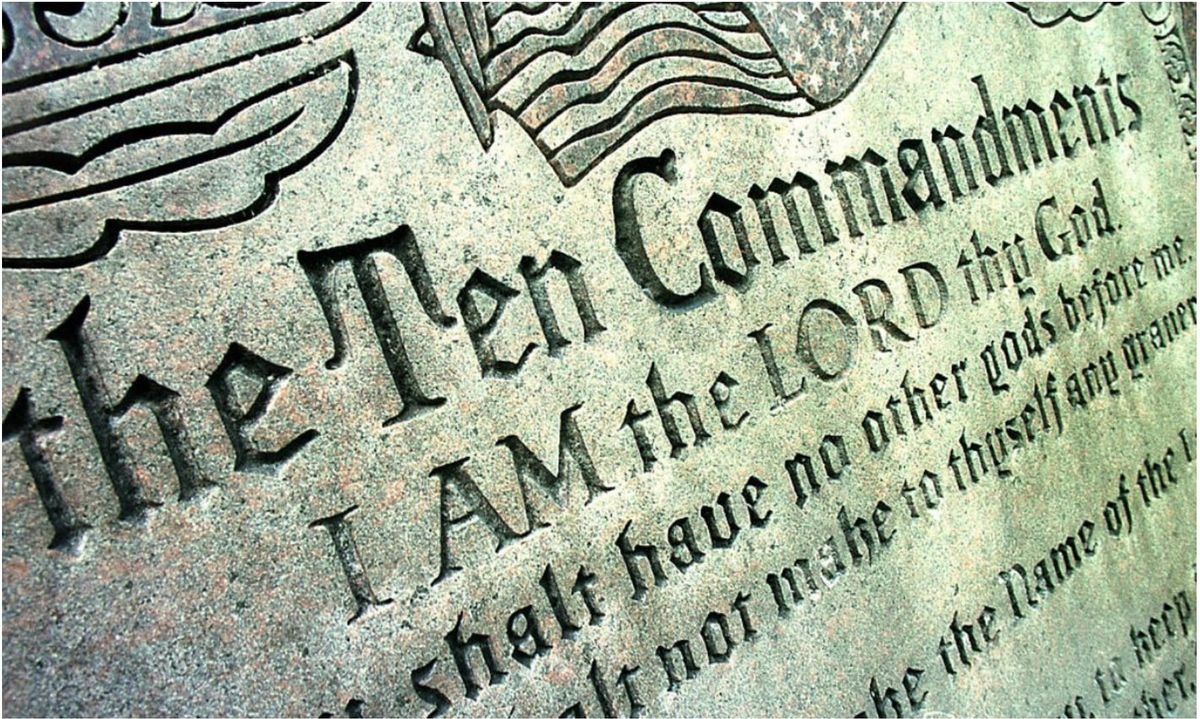
Faith roots run deep
Avoyelles Parish welcomes the Ten Commandments Mandate
By: Abi Guillot
In a landmark decision that has sparked nationwide debate, Louisiana has become the first state to mandate the display of the Ten Commandments in all public school classrooms, a law that took effect at the start of the current academic year. For residents of Central Louisiana, particularly in Avoyelles Parish, this development resonates deeply with the region's strong religious heritage, where faith has long been woven into the fabric of daily life.
As families here trace their roots through generations of devout believers, the new requirement is seen by many as a return to foundational values that prioritize God above all else, fostering moral integrity in an increasingly secular world.
The legislation, signed into law by Governor Jeff Landry in June 2024, requires that a poster-sized display of the Ten Commandments be placed in every public elementary, secondary and postsecondary classroom across the state. Proponents argue that this measure is not about imposing religion but about reminding students of timeless ethical principles that underpin civilized society.
In Avoyelles Parish, where communities like Cottonport, Bunkie and Marksville hold tight to their Catholic and Protestant traditions, supporters view it as a vital step to instill respect for divine authority from a young age.
Governor Jeff Landry stated at the signing event, "If you want to respect the rule of law, you’ve got to start from the original lawgiver, which was Moses."
This perspective is echoed in personal stories from the parish. Take, for instance, my experiences, I recall at Cottonport Elementary in the early-mid 1990s, every class recited, “Grace” before lunch, the Catholic prayer for meals, without a single complaint. Such practices contribute to a sense of unity and respect that seems diminished today. In this context, the Ten Commandments display is hailed as a bridge to an era, prioritizing God's word as the ultimate guide for behavior and decision-making.
Yet, the law has not been without controversy, drawing sharp criticism from civil liberties groups and those advocating for strict separation of church and state.
Opponents, including the American Civil Liberties Union (ACLU), contend that mandating religious texts in public schools violates the First Amendment's Establishment Clause, which prohibits government endorsement of religion. They argue that the displays could alienate students from non-Christian backgrounds, such as those from Muslim, Jewish, atheist or other faith traditions, potentially creating an environment of exclusion rather than inclusion.
In a state as diverse as Louisiana, critics point out that the specific Protestant version of the Commandments chosen for display might not resonate with all, and they fear it could lead to legal challenges or even coercion in classrooms.
A federal lawsuit filed shortly after the law's passage claims it promotes a particular religious viewpoint, with plaintiffs arguing that education should focus on secular subjects to ensure equality for all students.
Alanah Odoms, executive director of ACLU Louisiana, called the decision "a disappointing step backward," adding, “Religious freedom—the right to choose one's faith without pressure—is essential to American democracy.”
Supporters counter these concerns by highlighting the historical and cultural significance of the Ten Commandments, noting that they appear in the U.S. Supreme Court building and have influenced American jurisprudence.
In Avoyelles Parish, where church attendance remains high and family prayers are commonplace, the priority remains clear: God comes first.
The bill's author, Republican state lawmaker Dodie Horton, spoke of the importance of returning a "moral code" to classrooms, saying the Ten Commandments are the "basis of all laws in Louisiana" and that the legislation honors the country's religious origins.
As the debate unfolds, with potential appeals heading to higher courts, the impact in Central Louisiana is already palpable.
For families in Avoyelles Parish, the law represents more than policy; it's a reaffirmation of faith's primacy in shaping young minds. In a world grappling with moral ambiguities, prioritizing God through such measures could light the path back to righteousness. Whether this initiative withstands legal scrutiny or inspires similar efforts elsewhere, it underscores the enduring tension between faith and public life, all while reminding us that, for many here, the divine word remains the ultimate authority.
When asked, the Avoyelles Parish School Board, responded that they “do not plan to take a formal stance on this matter.”
The views expressed are those of the author of this article.



Comments ()