
Love Bugs? More Like Hate Bugs..
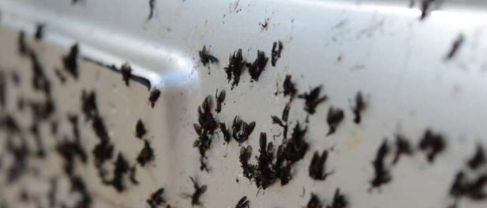
Love is in the air and all over our cars....
By: A. Guillot
If you have stepped outside, opened a door or driven anywhere in Central Louisiana lately, you already know: lovebugs are everywhere. They are floating through the air, covering vehicles, gathering around doorways and accumulating in dead piles along walls, sidewalks and corners.
Their name may sound affectionate, but there is very little to love about the mess they leave behind.
For many Avoyelles Parish residents, the seasonal invasion has become impossible to ignore. Drivers are finding windshields and vehicle grilles covered after even short trips, while homeowners are sweeping up piles of dead insects around porches and entrances. Some residents may wonder where they all came from, why there seem to be so many at once and, perhaps most importantly, when they are going to disappear.
Lovebugs are a Gulf Coast fly that typically appear in large numbers during spring and again from late August into September. Warm, humid conditions help trigger their seasonal emergence.
Most of a lovebug’s life is actually spent out of sight. The larvae live in soil, leaf litter and decaying plant material, where they feed on decomposing vegetation. Once they become adults, however, their focus shifts almost entirely to reproduction. That explains the familiar sight of two lovebugs flying while attached to one another.
After mating, females lay their eggs in moist, decaying vegetation. Adults live only a few days, but new waves can continue emerging, making the season seem much longer.
The good news is that lovebugs do not bite or sting, and they are not considered a threat to people or pets. They may be harmless, but that does not make them any less aggravating, especially for drivers.
Lovebugs are particularly noticeable near roadways and highways. They are active during daylight hours and are attracted to conditions commonly found around traffic, including heat and certain odors associated with vehicle exhaust. Because they are slow-moving and often fly in attached pairs, they have little chance of getting out of the way of an approaching vehicle.
Lovebug remains can quickly dry onto vehicle paint, windshields, headlights and chrome, especially under the Louisiana sun. Once they have dried, they can become much more difficult to remove. Large numbers can also collect around the grille and front of a vehicle.
For drivers, the easiest approach is usually to wash the insects away as soon as possible instead of allowing them to sit and bake onto the vehicle for days. Keeping windshield washer fluid filled and cleaning the front of the vehicle more frequently can also make the seasonal nuisance a little easier to manage. So, when will they leave us alone?
The good news is that the fall flight does not last forever. Seasonal lovebug activity generally continues for several weeks before the number of adults begins to decline. Individual lovebugs live only a few days, but repeated waves of newly emerging adults can make it feel as though they have taken up permanent residence.
Until then, Avoyelles Parish residents can expect to keep their windows closed, car-washing supplies nearby and perhaps a broom ready by the front door.
Lovebugs may be mostly harmless, but that does little to improve their reputation when they are covering a freshly washed vehicle or gathering by the hundreds around a doorway.
For now, the so-called “love” bug remains one of the least-loved signs of late summer in Central Louisiana. They do not bite, they do not sting and they will eventually disappear. But until they do, they certainly know how to make themselves unwelcome.

Comments ()