
Marksville Council Sparks Controversy Over Mayor’s $29/hr Water Department Assignment 💧💸
 subterra technologies
A prolonged and at times contentious discussion unfolded during the recent Marksville City Council meeting as council members questioned Mayor John Lemoine about the creation and continuation of a $29-per-hour assignment connected to the city’s Water Department. The discussion later broadened to include concerns about outdated city policies and a governing charter that dates back more than 180 years.
The dispute centered on the temporary reassignment of a longtime city employee to address a backlog of water customer deposit refunds, an issue that has appeared repeatedly in state audit findings. City officials stated during the meeting that the Water Department holds close to $200,000 in customer deposits that must either be returned to customers or transferred to the state as unclaimed property.
Mayor Lemoine defended the reassignment, citing staffing shortages within the Water Department, including one employee undergoing cancer treatment and another dealing with serious health issues. He stated that the reassigned employee has decades of financial experience and was best suited to complete the work quickly in order to comply with auditor directives and avoid further findings.
Councilman Torrick Friels questioned the nature of the assignment, repeatedly asking whether it constituted a formal position, whether it had been advertised, what the job title was, and why existing Water Department staff could not complete the work. Friels also raised concerns about transparency and council oversight, stating that council members were not informed in advance of the reassignment.
As the exchange intensified, Mayor Lemoine cited Louisiana Revised Statute 33:404, asserting that he has the authority to reassign municipal employees during emergency situations without prior council approval. At one point during the exchange, the mayor warned Friels that he could be removed from the meeting if the questioning continued.
City Attorney Jonathan Gaspard acknowledged on the record that a conflict exists between state law and the city’s internal policies. Gaspard stated that while city policy appears to require council approval for hiring and firing decisions, state law grants the mayor authority over municipal employees, and state law would prevail if the two are in conflict.
Despite extended debate, several questions remained unresolved by the end of the discussion, including whether the reassignment constitutes a formal position, whether a written job description exists, and how long the employee will remain in the role. Mayor Lemoine stated multiple times that the assignment is temporary and will end once the deposit issue is resolved, though no specific timeline was provided.
A motion was made by council members to eliminate the position and require that any similar work be advertised and filled through a formal hiring process. The motion failed on a split vote, allowing the reassignment to continue.
Councilman and mayoral candidate Carl Chapman offered a critical assessment of the situation, characterizing it as a broader governance issue.
“The meeting is a direct result of outdated policy and the willful disregard by some elected officials to bring the City of Marksville’s operation into 2026. There are policies in place to outline these processes that are conveniently being bypassed, which in some cases gives the public a perception of some type of shady business. The taxpayers deserve an explanation. They deserve transparency, which in my opinion is not being delivered.”
Later in the meeting, during a separate agenda item, council members turned their attention to the Marksville City Charter.
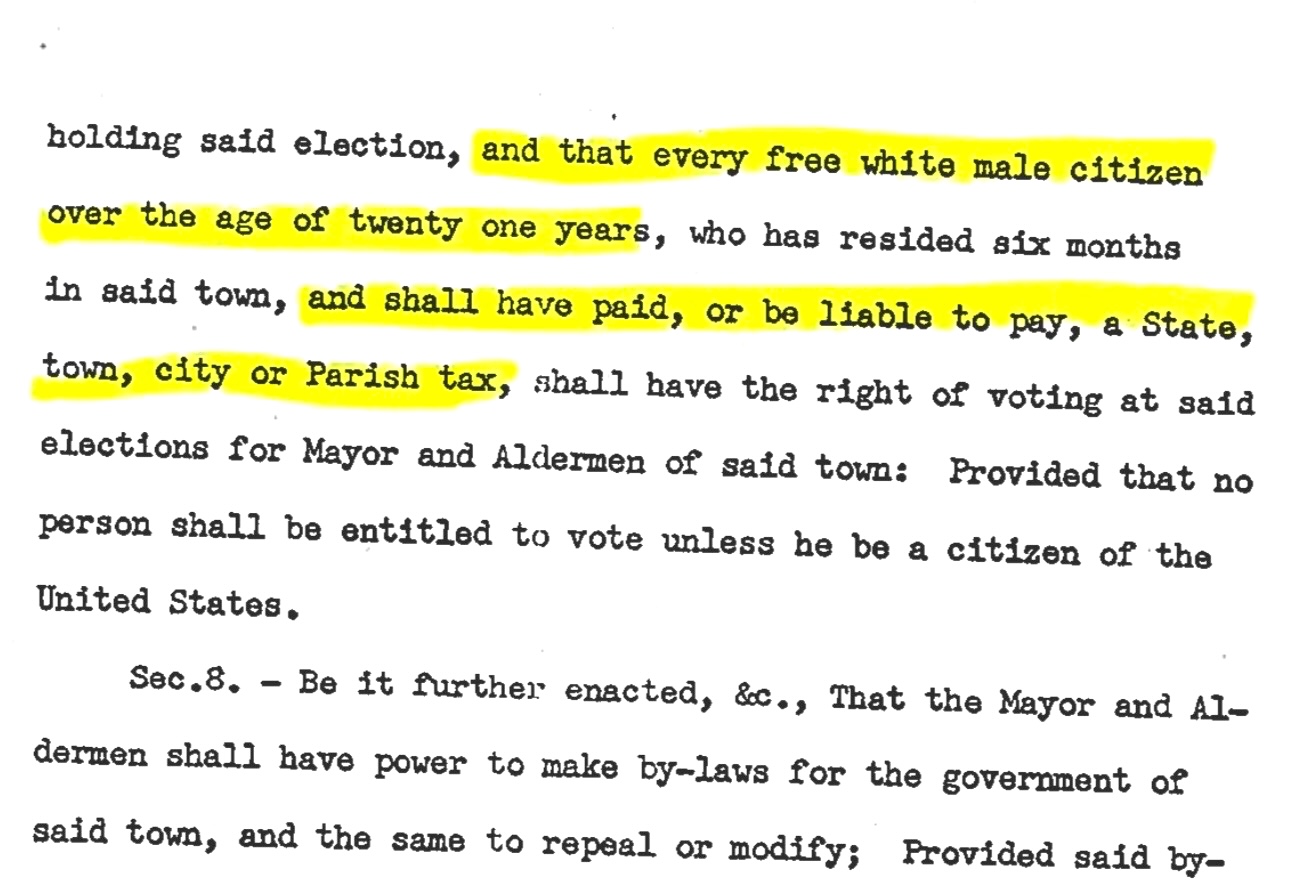
Council members stated on the record that the charter dates back to 1843, making it more than 180 years old. During the discussion, a provision of the charter was read aloud that limited voting rights to “free white male citizens.” Council members agreed that the language is unacceptable and reflects how outdated portions of the document have become.
The discussion suggested that reliance on a charter written in the mid-19th century could raise concerns when applied to modern governance disputes, including questions surrounding mayoral authority, hiring powers, and council oversight.
Attorney Gaspard outlined the legal process required to amend the charter, explaining that specific changes must first be identified by the council, publicly advertised for three weeks, and submitted to the Governor and Attorney General for review. If more than one-tenth of the electorate objects, a public vote would be required.
The council agreed to table the charter discussion and revisit it after members submit proposed changes, potentially at a special public meeting had not yet been posted on the City of Marksville’s official website.
The meeting underscored ongoing tensions within city government as officials continue to navigate modern administrative demands within a framework shaped by policies and governing documents written in a much earlier era.



Comments ()