
🌟 Native American Coalition Launches for Economic Prosperity
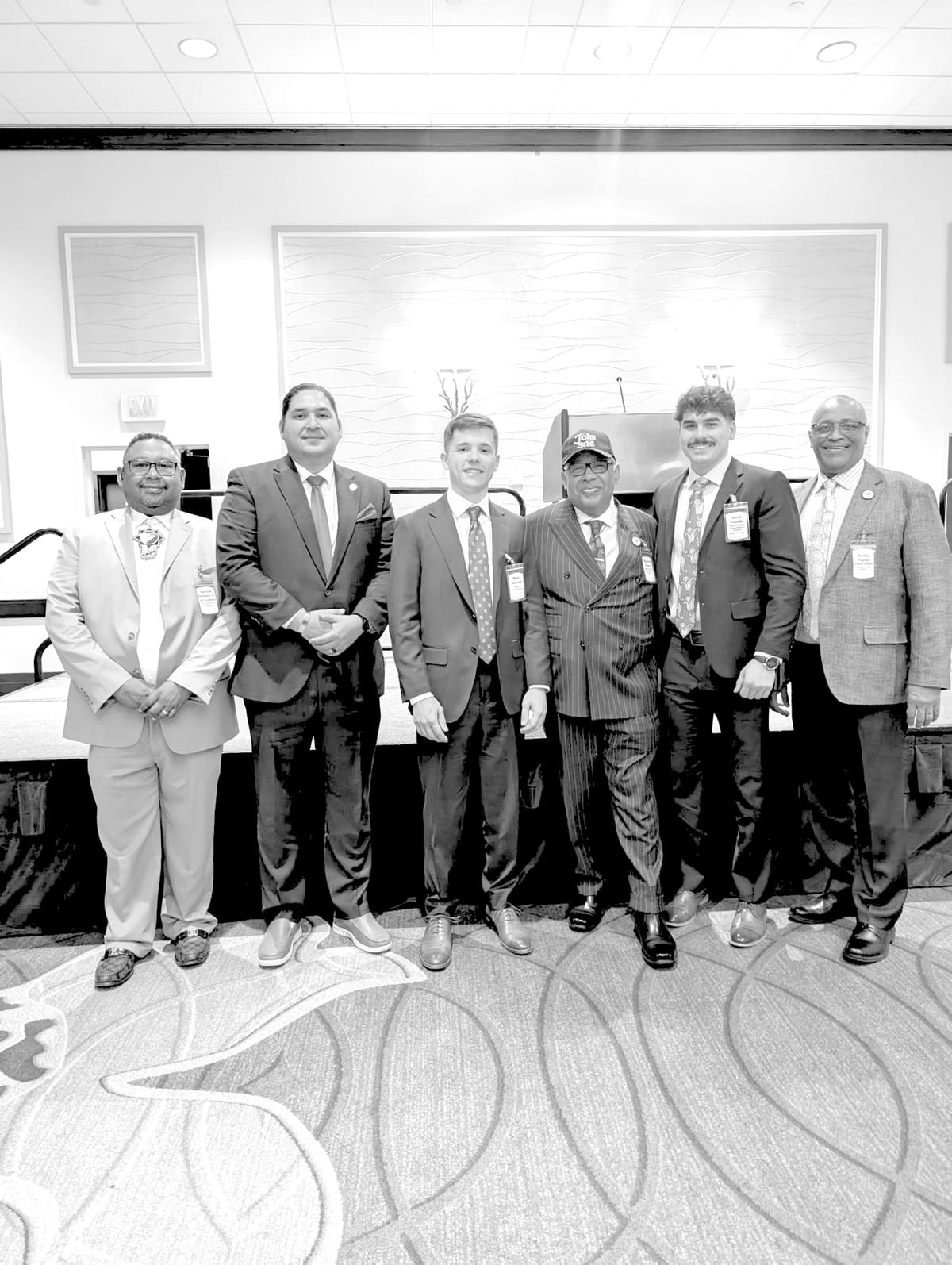
Tunica-Biloxi Tribe spearheads launch of the Native American Coalition for Economic Prosperity (NACEP)
By: Amy Boraks
Last month, more than 100 Tribal leaders, federal officials and national partners gathered in the nation’s capital for the third convening of the Government-to-Government Roundtable Series: Protecting, Preserving & Strengthening Tribal Sovereignty, hosted by the Tunica-Biloxi Tribe of Louisiana.
This convening marked a defining milestone for Indian Country with the official launch of the Native American Coalition for Economic Prosperity (NACEP) – a national, nonpartisan Tribal-led coalition initiated by Chairman Marshall Pierite of the Tunica-Biloxi Tribe of Louisiana, who was unanimously elected to serve as its first president.
Additional elected officers include:
- Vice President: Honorable Chairman Calvin Johnson, Tonto Apache Tribe
- Secretary: Honorable Chairperson Elizabeth Hutchins, Big Sandy Rancheria
- Treasurer: Honorable President Anthony Reider, Flandreau Santee Sioux Tribe.
More than 40 Tribal Nations were represented at the two-day convening, joined by leaders from the Administration and private-sector partners committed to advancing economic sovereignty and long-term development across Indian Country.
November 6 Government-to-Government Roundtable & luncheon
Chairman Pierite opened the convening by reflecting on the journey that began with the first roundtable held on the Tunica-Biloxi Reservation in June, followed by a second gathering in Washington, D.C. in July, noting how what began as a conversation has now transformed into a coordinated national effort.
Throughout the day, Tribal leaders engaged in open, candid dialogue about the challenges facing their communities and the shared opportunities ahead.
“We gather today at a crossroads—a moment when America is searching for renewal and strength. Tribal Nations are not a footnote to that story. We are the key to it,” Chairman Pierite said.
He publicly thanked members of the Administration who attended despite the ongoing federal shutdown, acknowledging that while their subject-matter experts were unavailable, their presence demonstrated dedication and partnership.
“We are not here to stand on the sidelines to criticize and hope for the best. We are here to help rebuild. We are here to be partners in transformation,” said Pierite. Continuing the discussions, leaders participated in a Luncheon featuring remarks and participation from Alex Meyer, Director of White House Intergovernmental Affairs.
The luncheon served as an open forum where Tribal leaders shared priorities, highlighted urgent needs and reinforced a united commitment to expanding economic prosperity across Indian Country. The dialogue reflected the collaborative spirit behind the newly formed coalition and its growing partnership with federal leadership.
A shared economic moment
Throughout the convening, speakers underscored that the United States is experiencing a historic economic shift, regulatory reform, rebuilding supply chains, expanding energy production and unprecedented momentum for Tribal-led development.
Chairman Pierite emphasized that Indian Country is uniquely positioned to lead during this pivotal period:
“We say we will participate. We say we will lead. We say we will build. We have land. We have sovereignty. We have resilience. And we have vision.”
He reiterated that unity—not competition—will define the next chapter of Tribal economic sovereignty.
Launching the Native American Coalition for Economic Prosperity (NACEP)
With the formal establishment of NACEP, Tribal Nations affirmed their commitment to a unified, forward-looking national economic strategy.
Chairman Pierite stressed that the coalition’s mission transcends political cycles:
“This coalition is not about red or blue, left or right. It is about sovereignty, self-determination, and unity of purpose. It is about building something that outlasts any political climate.”
NACEP’s Four Core Objectives
- Strengthen Tribal sovereignty through economic development and inter-tribal commerce.
- Promote the common welfare of Native Nations through coordinated policy advocacy and collaboration.
- Establish sustained coordination between Tribal governments, federal agencies and responsible private-sector partners to expand access to capital, investment tools and workforce development.
- Create jobs, revenue and long-term economic growth through real, actionable projects rooted in Tribal priorities.
Pierite highlighted that the Tunica-Biloxi Tribe has served as the catalyst for the coalition’s formation and noted that Tribal Nations are poised to play a central role in America’s economic future:
“When the Administration speaks of rebuilding infrastructure, expanding energy, strengthening small businesses and creating jobs, we say: Look to Native American Tribes. We can be the solution to America’s problems.”
Nov. 6 evening reception
The day concluded with an evening reception that brought together Tribal leaders, federal partners and national allies—including honored guest, United States Secretary of Health and Human Services, Robert F. Kennedy, Jr.; Treasurer of the United States, Brandon Beach; and Congressman Nick Begich.
The reception provided an opportunity for continued discussion and relationship-building following the formal sessions. Chairman Pierite highlighted the unity and momentum emerging from the roundtable:
“This is our time. This is our season. The opportunity before us is real, the moment is now, and we are ready. When Tribes thrive, communities thrive—and when we work together in trust and transparency, we all rise.”
Nov. 7 White House meeting
The following morning, Chairman Pierite and the newly formed Native American Coalition for Economic Prosperity (NACEP) were invited to the White House for a summit with Vice President JD Vance.
Chairman Pierite provided remarks about the purpose of the coalition and the importance of working collaboratively with the Administration to advance the goals of Native American Tribes. He was also honored to introduce the Vice President, who emphasized the Administration’s commitment to strong, solution-driven partnerships with Tribal Nations.
“You will always have allies in the West Wing,” Vice President Vance said.
“From the President to the Vice President, our vision is to empower Tribal Nations to build in ways America has never built before.”
The Vice President personally greeted every Tribal leader in attendance, demonstrating the Administration’s willingness to listen, learn, and engage directly with Indian Country.
Next steps for NACEP
Under Chairman Pierite’s leadership, NACEP will begin:
- Establishing regional working groups
- Developing national policy priorities
- Launching capacity-building initiatives
- Facilitating inter-tribal commerce and high-impact partnerships
- Strengthening coordination with federal agencies and responsible industry partners
NACEP’s mission is clear: to accelerate economic growth, expand opportunity and strengthen sovereignty for Tribal Nations across the United States—now and for generations to come.
More information on the Tunica-Biloxi Tribe of Louisiana can be found at Tunica Biloxi Tribe's Website. Information regarding NACEP can be acquired by emailing info@tunica.org.



Comments ()