🥛Trump Signs New Milk Law for Healthier School Lunches!
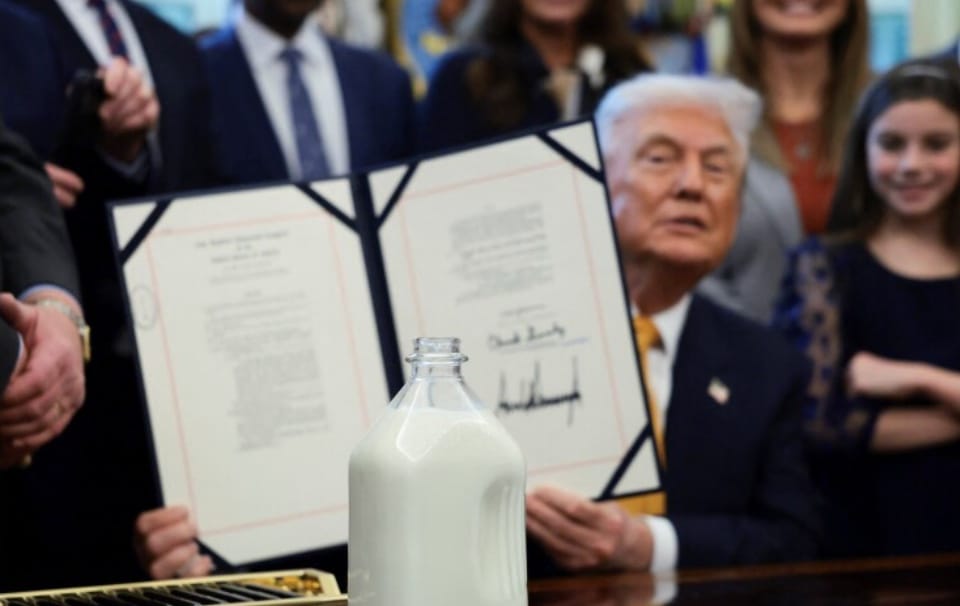
President Donald J. Trump signed the Whole Milk for Healthy Kids Act of 2025 into law on Jan. 14, expanding the types of milk that may be served to students through the National School Lunch Program (NSLP).
The law amends the Richard B. Russell National School Lunch Act and applies only to school lunches, not breakfast programs. It allows schools participating in the NSLP to immediately offer a wider variety of milk options beyond the previous fat-free and low-fat requirements.
Under the new law:
- Schools may now offer whole milk, reduced-fat (2%), low-fat (1%), and fat-free milk.
- Schools can provide lactose-free milk and nutritionally equivalent nondairy beverages, including fortified plant-based options.
- Milk may be flavored or unflavored and organic or non-organic, provided nutrition standards are met.
Schools must continue to offer at least two different milk options daily, and unflavored milk must still be available at each meal service. Flavored milk must meet added-sugar limits and, beginning July 1, 2025, may contain no more than 10 grams of added sugar per 8 ounces.
The law also changes how saturated fat is calculated in school meals. While federal rules still require meals to average less than 10 percent of calories from saturated fat each week, saturated fat from fluid milk is now excluded from that calculation. All other nutrition requirements — including calories, sodium, and future added-sugar limits — remain in effect.
Schools that choose to offer nondairy beverages to all students are no longer required to notify state agencies or require written requests for non-disability reasons. If nondairy beverages are not offered universally, the existing request process remains unchanged.
The legislation also simplifies disability accommodations. Parents or legal guardians may now submit written statements requesting a fluid milk substitute for students whose disabilities restrict their diets, a change from the previous requirement that such requests come from licensed health professionals.
The United States Department of Agriculture said it will update regulations through the rulemaking process and provide additional guidance to states and school systems as needed.
Comments ()