Landry Sets New Protections for Ratepayers on Data Center Tax Break
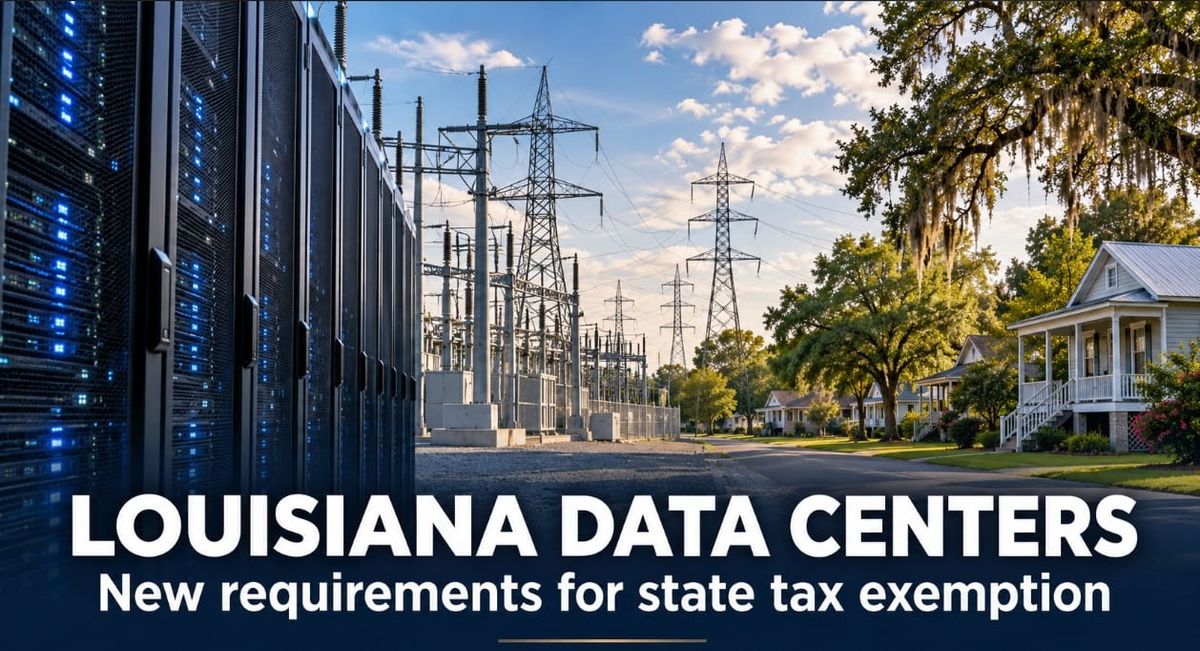
Companies seeking a major state tax break must now prove they will not raise residents' power bills or burden local communities
BATON ROUGE, La. - Louisiana residents worried that massive data centers could drive up their electric bills or strain local resources have a new layer of protection. Governor Jeff Landry has finalized rules that require companies to prove they will protect ratepayers and communities before they can receive one of the state's most valuable tax breaks.
The Louisiana Ratepayer and Community Protection Framework sets the requirements for any company seeking the state's Data Center Sales and Use Tax Exemption. Landry created the initiative by executive order in June, and the finished framework was announced four months later. The state says it is among the first in the nation to set this kind of standard as demand for digital infrastructure grows.
Landry said the framework keeps Louisiana competitive in advanced computing while setting the standard for how states can pursue these projects "responsibly and put their people first."
Companies now have to earn the break
The tax exemption will no longer be open to any company that applies. It becomes an invitation-only program, reserved for companies prepared to make significant, long-term commitments to Louisiana.
To qualify, a company must show meaningful commitments in eight areas:
- Shielding existing utility customers from costs tied to the project
- Strengthening the reliability of the power grid
- Investing in Louisiana's workforce and communities
- Contributing to local tax bases
- Protecting natural resources
- Growing the state's innovation economy
- Operating transparently
- Being held accountable for the promises it makes
Rather than one checklist for every project, the framework lets companies shape their commitments around the needs of the community where they plan to build.
Promises in writing, checked by multiple agencies
Before receiving the exemption, a company must file a detailed attestation spelling out how it will meet each requirement. Louisiana Economic Development will review those filings with input from the Louisiana Department of Conservation and Energy, the Louisiana Public Service Commission, the Louisiana Department of Environmental Quality and the utility that would supply the project's power.
LED Secretary Susan B. Bourgeois said the framework turns the state's priorities into measurable commitments from day one. She said it also gives the state a clear way to judge what each project contributes over time and to hold companies to their word.
A new name for an evolving industry
Going forward, the state will refer to these facilities as "digital factories," reflecting their growing role in powering artificial intelligence and producing digital goods and services. The tax exemption itself will keep its current name to stay consistent with state law.
What it means for residents
For Louisiana families, the practical effect is simple. A company that wants the state's help building one of these facilities must now show up front that local ratepayers will not foot the bill, that the grid will hold up and that the surrounding community will come out ahead. If it cannot make that case, it does not get the break.

Comments ()