🚨 Medicaid Changes Threaten Health Care Access for Louisiana's Native American Tribes
New Medicaid rules requiring recipients to work and reverify coverage every six months could significantly impact Native American communities across Louisiana, particularly those from state-recognized tribes.
While approximately 4,000 members of Louisiana’s four federally recognized tribes are exempt from the changes, an estimated 24,000 members of 11 state-recognized tribes will be subject to the new requirements. Tribal leaders and Indigenous experts say those changes could disproportionately affect communities already facing barriers to health care.
“Instead of investing the time and energy to find more effective solutions, the common response has been to step away from the problem,” said Devon Parfait, chief of the Grand Caillou Dulac tribe.
Federally recognized tribes — including the Chitimacha Tribe of Louisiana, Coushatta Tribe of Louisiana, Jena Band of Choctaw Indians and the Tunica-Biloxi Indian Tribe — are protected due to longstanding federal agreements. State-recognized tribes, however, do not have the same access to federal resources, including certain health care protections.
State-recognized tribal members often rely on limited resources, including rural clinics or Indian Health Service facilities located on tribal lands, which can be hours away. For some coastal communities, access to care may require significant travel, creating additional challenges.
Around 60 percent of Native Americans in Louisiana rely on Medicaid, compared to about one-third of the state’s overall population. Tribal leaders warn that losing coverage could mean going without care entirely.
“People are going to have to choose between food and insurance, and most will choose food,” said tribal elder Shirrell Parfait-Dardar.
Health concerns in these communities are already significant, with higher rates of chronic conditions such as diabetes, heart disease and liver disease. Experts say the added burden of new requirements could worsen those disparities.
Many state-recognized tribes also face economic and environmental challenges, particularly in coastal areas where flooding, hurricanes and land loss are ongoing threats. Limited infrastructure and distance from medical facilities further complicate access to care.
As the changes take effect, tribal leaders say communities are preparing for potential coverage losses that could impact families for years to come. Some are calling for greater collaboration between state and federal leaders to address gaps in care and ensure access for all Native Americans in Louisiana.
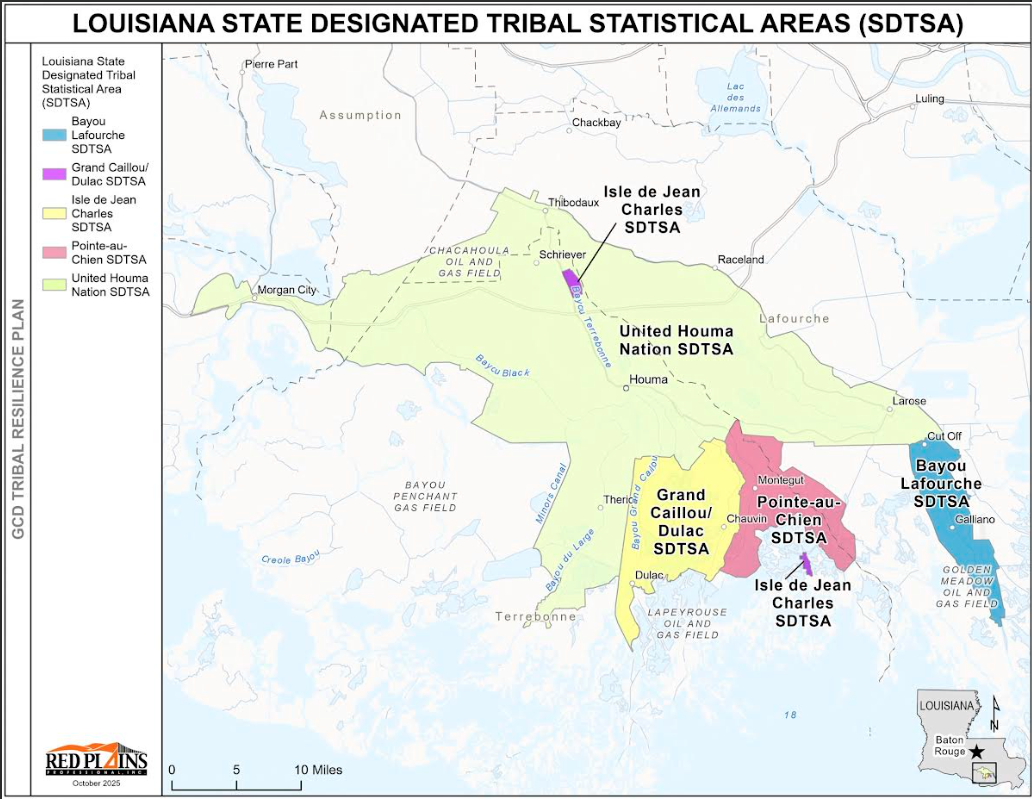
Most of Louisiana’s 11 state-recognized Native American tribes — representing about 85% of the Indigenous population — are located in coastal regions of the state, where access to resources and services can be more limited.
Graphic courtesy of Devon Parfait.
Comments ()