When There Is No One to Blame
By Dr. Jay Callegari
The floodwaters that swept across southern Avoyelles Parish will be remembered for a very long time.
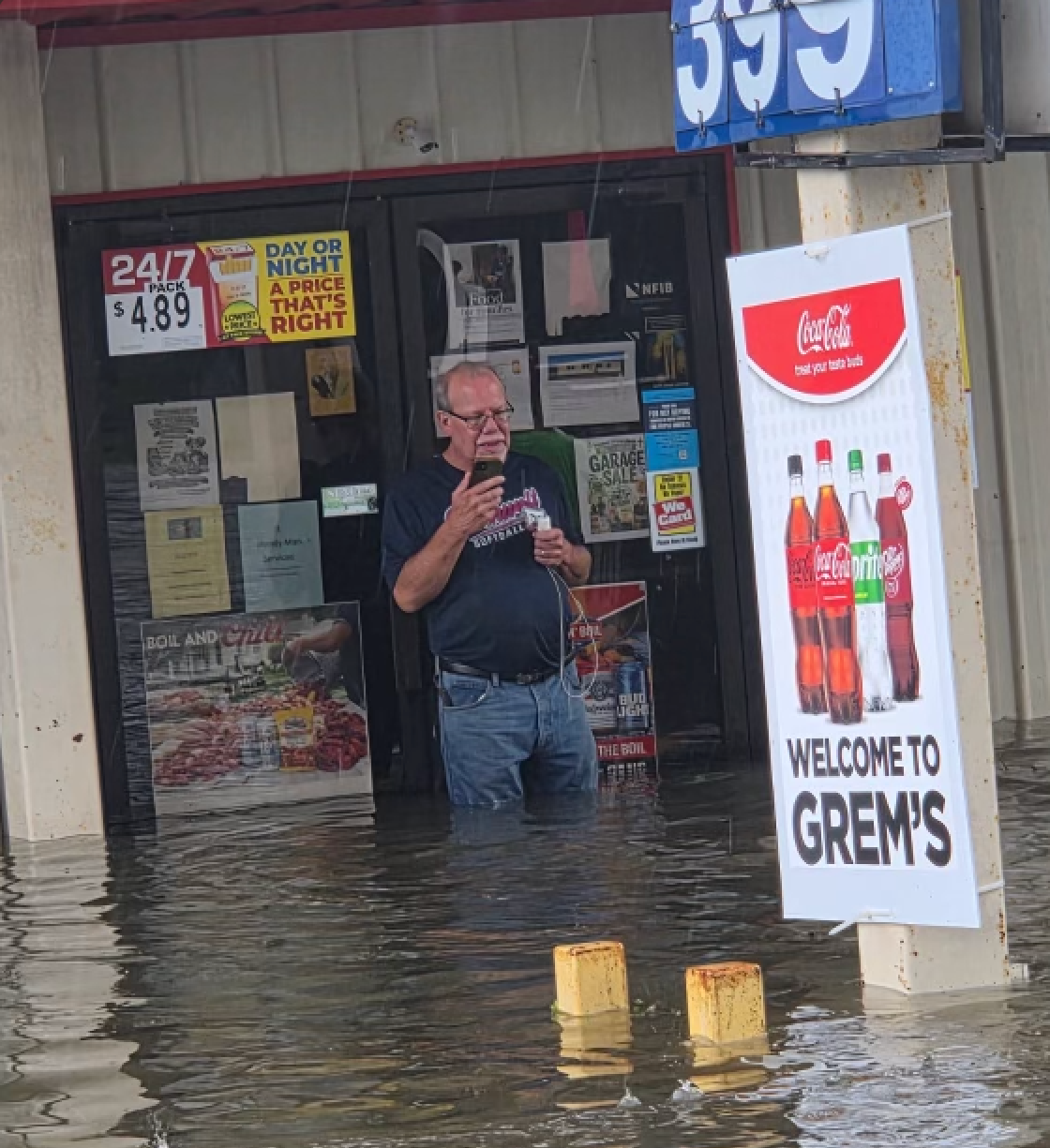
Families watched water rise into homes. Businesses closed their doors. Roads disappeared beneath floodwaters. Personal belongings accumulated over a lifetime were damaged or destroyed. For many, the emotional toll may last longer than the physical cleanup.
In the days since the flood, I have spent time reading comments online, listening to conversations, and talking with people throughout the parish. One thing has become clear: when something this devastating happens, people naturally look for someone to blame.
Some blame politicians. Some blame drainage systems. Some blame insurance companies. Some blame FEMA. Others blame local officials, government agencies, or anyone they believe should have somehow prevented what happened. In difficult times, pointing fingers often feels easier than accepting a much harder truth.
Sometimes bad things happen to good people.
And sometimes it is nobody’s fault.
That may be difficult to hear when your home is flooded, your possessions are ruined, and your family is facing weeks or months of recovery. Anger is understandable. Frustration is understandable. Grief is understandable.
But facts are facts.
When an area receives rainfall measured not in inches but in feet, nature reminds us that there are limits to what human beings can control. Reports from across the affected area indicate rainfall amounts approaching 30 inches in less than a day. That is not a normal storm. That is not a heavy rain event. That is a historic weather disaster.
No drainage system in Avoyelles Parish was designed to handle that amount of water falling that quickly.
No ditch, culvert, canal, or pump system could have prevented widespread flooding under those conditions. Even if every ditch had been freshly cleaned and every culvert perfectly clear, water still would have left its natural channels and spread across the landscape.
Water follows the laws of nature, not the wishes of man.
Once bayous and drainage channels overflow their banks, water begins searching for the next lowest ground. It spreads across fields, roads, neighborhoods, and forests. In a parish as flat as ours, that water does not simply disappear.
Unlike mountainous regions where floodwaters may rush away within hours, Avoyelles Parish is blessed and challenged by its flat terrain. When water spreads across thousands of acres of low-lying ground, it takes time for gravity to slowly guide it back into bayous, rivers, and drainage channels. There is no switch to flip. There is no magic solution. The water recedes only as fast as nature allows.
That process takes time.
Perhaps the most important thing our community needs right now is patience.
Patience with our neighbors.
Patience with our local officials.
Patience with insurance companies.
Patience with state and federal agencies.
Patience with the recovery process itself.
Nothing about this will be fixed overnight.
Homes will not be rebuilt overnight. Insurance claims will not be processed overnight. Roads, drainage systems, and infrastructure will not be repaired overnight. Assistance programs take time. Contractors take time. Recovery takes time.
That reality is frustrating, but it is also unavoidable.
Previous generations understood this reality better than we often do today. Hardship was not considered unusual. It was expected. Floods came. Crops failed. Storms destroyed homes. Families struggled. Yet communities endured because people understood that life includes hardship and that overcoming hardship requires perseverance, patience, and faith.
Our grandparents and great-grandparents did not spend their energy looking for someone to blame every time disaster struck. They spent their energy helping their neighbors and rebuilding what had been lost.
There is wisdom in that approach.
What has impressed me most during this crisis is not the flood itself.
It is the response.
I have watched churches open their doors. Nonprofit organizations mobilize almost immediately. Businesses donate supplies. Volunteers fill sandbags, deliver meals, operate boats, clean homes, and provide comfort to people they may not even know personally.
I have watched neighbors helping neighbors.
I have watched complete strangers show up simply because somebody needed help.
I have watched people who were dealing with damage to their own homes stop what they were doing to assist someone whose situation was even worse.
That is the Avoyelles Parish I know.
The outpouring of generosity has been remarkable.
If someone from another part of the country spent a week in Avoyelles Parish during this disaster, they would leave with a completely different impression than the one created by angry social media posts. They would see churches working together. They would see civic organizations stepping up. They would see volunteers serving meals, collecting donations, cleaning homes, and checking on elderly residents.
Most importantly, they would see people caring for one another.
They would see kindness.
They would see compassion.
They would see a community that refuses to abandon its own.
In fact, they might wonder why more places are not like this.
The flood revealed many things. It exposed vulnerabilities. It tested our patience. It reminded us how quickly life can change.
But it also revealed something far more important.
It revealed the character of the people of Avoyelles Parish.
As I write this, many families are still rebuilding. Some are still tearing out sheetrock. Others are pulling up soaked carpet, hauling debris to the curb, and sorting through a lifetime of memories damaged by floodwaters. The work is far from over.
There will be difficult days ahead.
There will be frustrations.
There will be setbacks.
There will be moments when the road back feels longer than anyone would like.
But amid all the destruction, there is something important we should never forget.
No flood-damaged house is more valuable than a human life.
No road, ditch, culvert, vehicle, piece of furniture, family photograph, or treasured possession is more important than the people who share our lives.
We can repair homes.
We can rebuild businesses.
We can replace clothes, furniture, appliances, and vehicles.
We can improve drainage systems.
We can reconstruct roads and bridges.
We can rebuild nearly everything that water touched.
What we cannot replace is each other.
For all the damage this flood caused, we should pause and be grateful for one extraordinary blessing. Despite the magnitude of this historic event, no loss of life was reported and serious injuries were remarkably few.
Considering what occurred, that is nothing short of a blessing.
Years from now, most of the physical scars left by this flood will be gone. Homes will be repaired. Businesses will reopen. Roads will be restored. Grass will grow back. Life will move forward.
What should remain is the memory of how an entire community came together when it mattered most.
Sometimes bad things happen to good people. That is an unfortunate reality of life.
But this flood reminded us of another truth.
When adversity arrives, the people of Avoyelles Parish take care of one another.
And in the end, that may be the most important lesson of all.
Comments ()